Staking has come a long way since the early days of crypto. Back then, if you wanted to help run a blockchain and earn rewards, you needed racks of noisy mining rigs and a power bill that could make you wince. Proof-of-stake flipped that idea on its head. Instead of burning electricity, you “lock up” your tokens to help validate transactions, and in return, you get a steady flow of rewards.
On Solana, staking is more than just a side hustle for your SOL. It’s what keeps the network fast, secure, and ready to handle everything from DeFi apps to NFT marketplaces. And the best part? You don’t need to be a tech wizard to do it. That’s where Solflare comes in. It’s one of the go-to wallets for Solana users, built to make staking simple enough for beginners but flexible enough for people who’ve been in crypto for years.
In this guide, we’ll walk through what staking on Solflare actually looks like, how to get started, and a few tips to help you squeeze the most out of your rewards without putting your SOL at unnecessary risk.
Whether you’re interested in earning rewards by staking SOL, engaging in DeFi protocols, trading tokens, or managing NFTs, Solflare streamlines all these activities within an intuitive interface accessible on web, desktop, browser extension, and mobile devices.
Overview of Solflare Wallet
Solflare is a multi-platform, non-custodial wallet purpose-built to unlock the Solana blockchain’s full potential. With it, users can:
- Create and restore wallets with a recovery phrase or connect to hardware wallets like Ledger for enhanced security.
- Send, receive, store, and swap SPL tokens and NFTs, all within a visually clean and responsive dashboard.
- Track portfolio performance, validator statistics, and manage staking accounts through dedicated wallet tabs..
The wallet is available as a web app, browser extension (e.g., Chrome, Firefox), and mobile app (iOS, Android), syncing across devices for a smooth and consistent experience. Solflare’s design philosophy centers on clarity: key functions like staking and trading are always just a tap or click away, minimizing confusion for beginners and offering advanced tools for seasoned users.
Read our full Solflare review.
Why Use Solflare For Staking?
First, it's direct integration with Solana’s native staking system means you can delegate SOL to validators and monitor your rewards entirely from within the wallet. The platform’s best security features, including anti-phishing protections, hardware wallet compatibility, and open-source code, add peace of mind.
Solflare is also trusted by millions, securing billions in value across the Solana network, further establishing it as a leading choice among wallets. Its real-time insight into staking rewards, historic performance of validators, and flexible unstaking options empower users to make informed decisions, maximizing passive income without sacrificing security or convenience.

Solflare Wallet is The Most Powerful Wallet on Solana. Image via
SolflareKey Terms You’ll Need To Know
Understanding these terms is crucial for successful staking on Solflare:
Step-by-Step Guide: How to Stake SOL on Solflare
Staking SOL on Solflare is secure and streamlined. Follow these clear and concise steps to ensure a smooth staking experience.
Step 1 – Set Up or Log In to Your Solflare Wallet
Go to the official website: https://www.solflare.com or the Solflare wallet extension on Google Chrome/Safari.
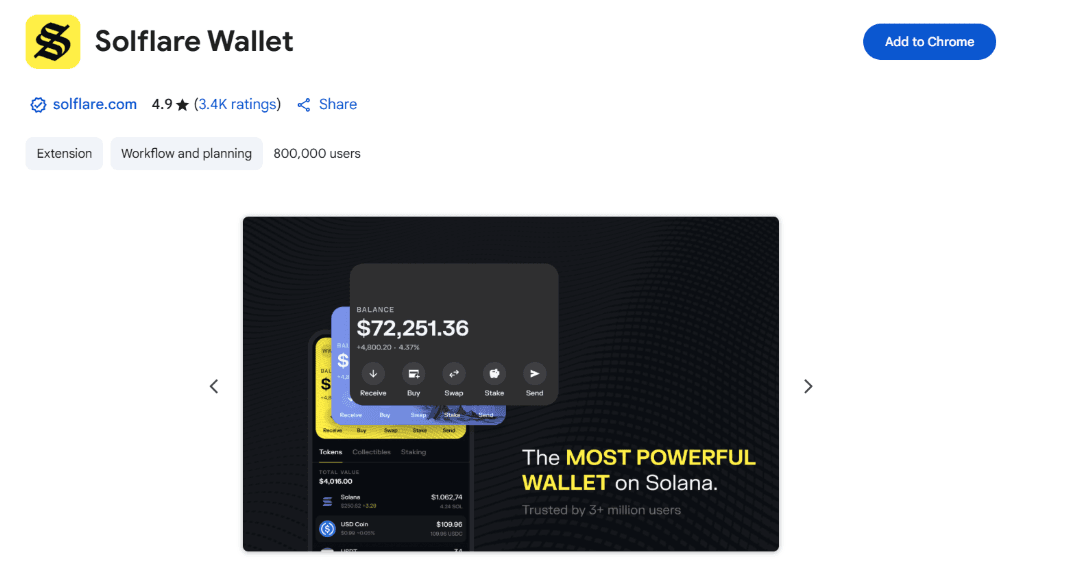
Solflare Wallet Is Available via A Desktop Extension As Well. Image via
SolflareAdd the extension.
All users must create or import a wallet.
New Users: Click Create a New Wallet and follow the prompts.

Users Can Import Their Existing Wallet Or Continue with Ledger As Well. Image via
SolflareExisting Users must select the access wallet to import using their recovery phrase or connect a hardware wallet.
Important Security Tips:
- Always write down your 12 or 24-word recovery phrase and store it offline; never share it.
- Do not save private keys digitally where they could be compromised.
Step 2 – Fund Your Wallet with SOL
Copy your Solflare wallet address and send SOL from an exchange or another wallet.
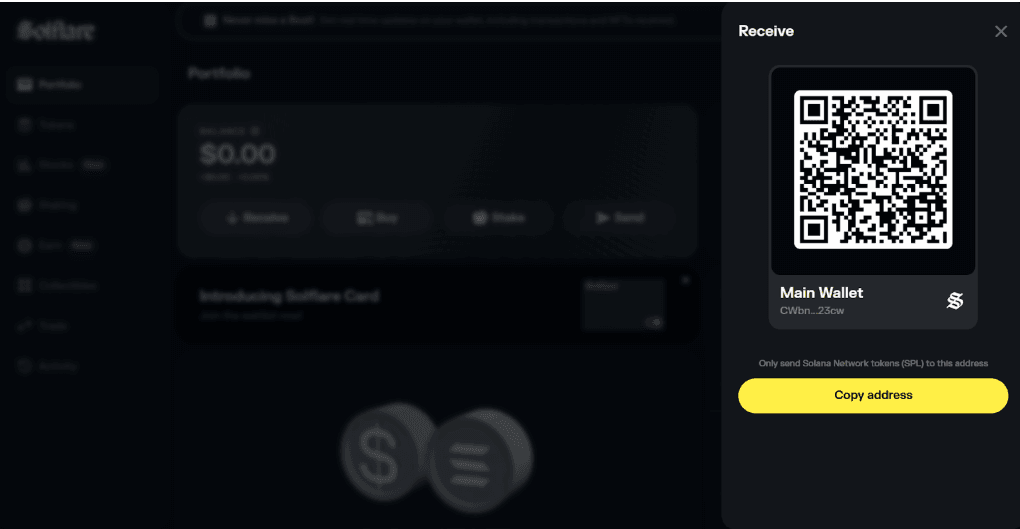
Fund Your Wallet From Another Wallet or Exchange And Start Staking. Image via
SolflareMost validators require at least 0.01 SOL for delegation (check Solflare for current limits). Users must also expect a small network fee (usually <0.001 SOL) when sending or staking SOL.
Step 3 – Navigate to the Staking Section
On the Solflare dashboard, locate and click on the Staking or Earn tab. Look for icons or buttons labeled “Stake” or “Start Staking.”
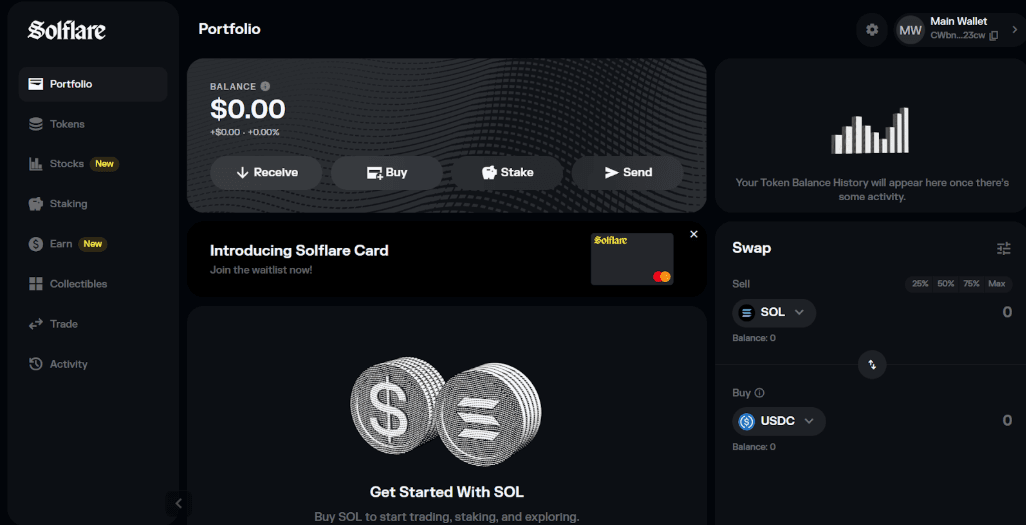
Solflare's Native Staking Dashboard Allows You to Trade, Swap and Stake Solflare. Image via
SolflareTypically, the staking dashboard features a list or grid of validators and staking options.
Step 4 – Choose a Validator to Delegate To
Check for low commission rates (lower fees mean higher rewards). Review validator performance & uptime stats (look for consistent, reliable history).
A good practice would be to consider decentralization by spreading your delegation over several validators. Solflare displays rankings, commission %, and performance metrics for easy comparison.
Step 5 – Confirm and Submit Your Delegation
Once you have decided how much SOL to delegate.
Then:
- Review Fees: The confirmation screen will show network fees.
- Finalise Transaction: Click Confirm or Delegate and wait for blockchain confirmation, which is typically instant or a few seconds.
Step 6 – Track Your Staking Rewards
The staking dashboard displays current rewards, pending rewards, and validator statistics.
- Rewards Distribution: Rewards are paid at the end of each Solana epoch (about every 2 days).
To move funds, use the dashboard’s unstake or redelegate buttons. There’s a cooldown period before unstaked SOL becomes available.
What Is Staking and Why Do It?
Staking, in the context of blockchain, is the process of actively participating in transaction validation on a proof-of-stake (PoS) blockchain. Instead of relying on energy-intensive mining, PoS networks like Solana allow token holders to “lock up” or delegate their tokens to validators who maintain the network.
Here’s why people stake their coins with platforms like Solflare:
- Earn Passive Rewards: By delegating your SOL tokens to a validator, you begin to earn a share of the network’s staking rewards. These rewards are distributed automatically and can grow over time, especially when compounded.
- Strengthen Network Security: Staking directly supports the decentralized structure and security of the blockchain. The more users stake, the stronger and more secure the network becomes, as it is increasingly difficult for malicious actors to impact consensus decisions.
- Accessible to All: On Solflare, you don’t need to operate a validator node yourself. Any amount above the minimum (typically as low as 0.01 SOL) can be delegated, making staking highly accessible for newcomers and smaller holders.
Staking previously was just about rewards, but with most blockchains shifting their consensus to PoS, it’s now about participating in the blockchain’s ecosystem. By staking, you are reinforcing the network, helping maintain decentralization, and setting the stage for the next era of fast, low-cost, and secure finance.
Understanding the Solana Ecosystem
Solana Ecosystem Has One of The Most Number of Staking Pools. Image via
Tangem.
Solana is a high-performance blockchain that uses an innovative hybrid of Proof of Stake and Proof of History (PoH) to process transactions at lightning speed and minimal cost.
Solana’s PoS allows validators to secure the network and validate transactions by staking SOL tokens. Validators with higher stakes are more likely to be selected to validate, ensuring security is proportional to investment in the ecosystem.
By staking SOL, you contribute to the security and overall performance of the network. Validators with substantial, honest stake are incentivized to behave correctly. The more widely SOL is staked, the harder it becomes for any single party to compromise network operations.
On top of it, Solana’s unique combination of PoS and PoH allows it to offer extremely fast block times (often under one second) and transaction costs lower than a fraction of a cent. These efficiencies make staking and DeFi activities on Solflare seamless and attractive for users.
This design encourages participation and helps scale the network’s throughput. This makes the Solana ecosystem one of the most compelling for staking and decentralized applications.
If you are already motivated, then don't stop yourself from jumping into the best staking pools on Solana.
Benefits of Staking SOL
Staking SOL through Solflare gives regular rewards at each epoch, but there are more benefits than just these returns.
- Passive Income: When you stake your SOL through Solflare, you receive regular staking rewards paid out at each epoch, providing a steady source of passive income as your assets work for you.
- Supporting Decentralisation: By delegating to a variety of validators, you are directly supporting decentralization, an important value for blockchain. This ensures that network control isn’t concentrated among a few large players.
- Compound Earnings: Staking rewards are automatically added to your delegated stake, so you earn “interest on interest,” growing your portfolio even without manual intervention.
- Enhanced Network Security and Uptime: Your stake adds weight to the validator's voting power, making the network resilient against attacks.
- Flexible Participation: With Solflare, users can stake, unstake, or redelegate at any time, giving them flexibility and direct control over their assets.
- No Custodial Risk: When you delegate on Solflare, your SOL never leaves your wallet’s control, so you remain the ultimate owner of your assets.
What Are the Risks and Limitations of Staking on Solflare?