



The global economy continues to hold its breath waiting for some form of resolution to the crisis in the Middle East, but neither side looks ready to back down, meaning oil is almost the only asset going up in price. Today’s forward guidance looks at what we might expect over the coming week across various asset classes.
Elsewhere, AI companies enjoyed a stellar end to Q1, but as investors continue to hurl money at the sector, its inherent fragility only becomes more obvious. We take a look at who has been showered in cash and what the AI industry needs to do now to stop the bubble from bursting.
⚗️Taking a Naphtha ⚗️
The price of crude oil has been at the forefront of everyone’s minds recently, as investors everywhere ponder the implications of the Iran crisis. But, it’s not just crude we should be concerned about. One of the byproducts of the refining process is naphtha, a chemical that is absolutely vital to modern manufacturing. Without it, we are in trouble.
In today’s video, we examine naphtha’s critical importance and the impact of its supply being choked off by the closure of the Strait of Hormuz. We explain exactly what it’s used for, who relies on it and what, if anything, can be done to mitigate the shortage.
And, by the way, this naphtha deep dive is brought to you by the newest member of the Coin Bureau team.
You can watch that video here.
📈 Crypto Market Forecast 📈
As highlighted last week, the only logical outcome of the Iran war was some form of de-escalation, because further escalation was untenable. Logic did not prevail. Seven weeks into the conflict, the TACO trade has now failed for the fourth time. Iran shot down a US fighter jet this week, a second aircraft crashed near the Strait of Hormuz, and Iran told mediators its terms for any peace deal remain what they have always been: a full withdrawal of American forces, reparations for war damages, and de facto control of the Strait. The US finds none of these acceptable. The war grinds on.
The practical effect: oil is back above $100 a barrel. Dated Brent hit $141 on Thursday, the highest level since the 2008 financial crisis, as the IRGC confirmed the Strait will stay closed long-term for the US and Israel. The UAE has requested action under Chapter VII of the UN Charter to open the Strait, possibly by force, while also reasserting its own right to self defence. The IRGC, for its part, is now charging tolls on Hormuz transit, payable in Chinese yuan or stablecoins, while Iran's parliament voted to keep the waterway shut indefinitely. If last week's newsletter was a warning, this week is the confirmation: Iran sees no reason to deal, because it believes it is winning.
Against that backdrop, Friday's jobs report looked, at first glance, like a lifeline. The US economy added 178,000 jobs in March, crushing expectations of 65,000 and pushing unemployment down to 4.3%. The catch is that this data was collected well before the full weight of $100-plus oil reached the US economy. February's payroll count was also revised to -133,000. What the March number captures is momentum that existed before the energy shock; it tells us nothing about what happens when diesel prices, freight costs, and inflation expectations fully transmit into corporate margins and consumer spending over the next quarter.
The Fed is meanwhile effectively paralyzed: Jerome Powell said this week that the central bank's tools have no meaningful effect on supply shocks. Rate hikes won't fix an oil crisis and rate cuts into inflation would be politically and economically reckless.
Gold has told a complicated story in recent weeks. It fell more than 20% from its late-January ATH of $5,594, briefly entering a technical bear market before recovering some ground. The selloff is partly mechanical: Asian oil importers have been liquidating dollar-denominated assets, including gold ETFs, to cover surging energy bills. The structural case for gold - fiscal deficits, US Treasury credibility erosion, sustained central bank accumulation - has not changed. It has simply been overwhelmed by a liquidation wave from energy-stressed sovereigns. If and when that forced selling exhausts itself, gold's resumption is likely to be sharp. It remains one of the clearest long-term beneficiaries of a world in which the dollar's reserve role is gradually being renegotiated.
Bitcoin faces a technically precarious setup heading into a week shortened by the Easter holiday. Glassnode's weekly report flagged that negative gamma is now building between $68,000 and the high $50,000s. In practical terms, if BTC loses the $68,000 level decisively, there are no natural market-maker stabilizers until the $50,000 to $60,000 range. Options dealers in negative gamma territory are forced to sell as price falls, amplifying moves lower rather than cushioning them. The Easter weekend has also brought reduced institutional participation and thinner order books, exactly the conditions under which that kind of cascade is most likely to develop.
The more interesting tension is what institutional players are doing beneath the surface. Strategy's accumulation pace hit roughly 45,000 BTC over the past 30 days, the fastest clip since April 2025, buying through the drawdown rather than retreating from it. Morgan Stanley filed its MSBT spot Bitcoin ETF, which would be the first such product issued directly by a major US bank, and notably with a lower fee than BlackRock. North Carolina advanced a Bitcoin reserve bill through its first Senate reading. Charles Schwab, overseeing $12 trillion in assets, announced plans to launch a crypto vertical letting clients buy BTC directly. The institutional layer is accumulating while retail sentiment hits multi-year lows, which is historically how bottoming processes are seeded, though the timing depends almost entirely on when the Iran situation breaks.
On the legislative front, the CLARITY Act's stablecoin yield provision remains unresolved. Coinbase's CLO told reporters a deal was "very close" earlier this week, but the Senate Banking Committee entered Easter recess without locking in the text. The markup is now targeted for late April, and every delay narrows the window before midterm-cycle politics absorbs congressional bandwidth. The unresolved yield question - whether stablecoin issuers can pass yield to holders - is a central issue for the DeFi sector's regulatory framework.
One more variable surfaced this week that is worth flagging even if the timeline feels distant. Google published research showing that its quantum AI team has designed attack methods requiring 1,200 to 1,450 high-quality qubits to crack Bitcoin's elliptic curve cryptography, a fraction of earlier estimates. The paper also highlighted that Bitcoin's Taproot upgrade, which exposes public keys by default, increases the attack surface compared to legacy address formats. No quantum machine is near this threshold today. Google's own modeling, however, points to viable attack capability potentially arriving by 2029. A BIP has already been proposed to address quantum resistance, with a testnet live. The window for orderly migration is still open; the question is whether the ecosystem treats it as urgent or waits until urgency is forced upon it.
The directional call for this week is cautious. Bitcoin's structure below $68,000 is fragile. Thin Easter liquidity, persistent Iran war escalation, and a negative gamma environment between $68,000 and the $50,000s create genuine downside risk before any sustained recovery. The base case is a test of the $60,000 to $65,000 range at minimum, possibly lower, before the war resolution unlocks the institutional accumulation that is clearly building beneath the surface. The upside scenario is a ceasefire surprise, but Iran's stated terms are unlikely to be accepted by Washington, and the pattern of four failed TACO trades should calibrate expectations accordingly.
🤖 The Duality of AI 🤖
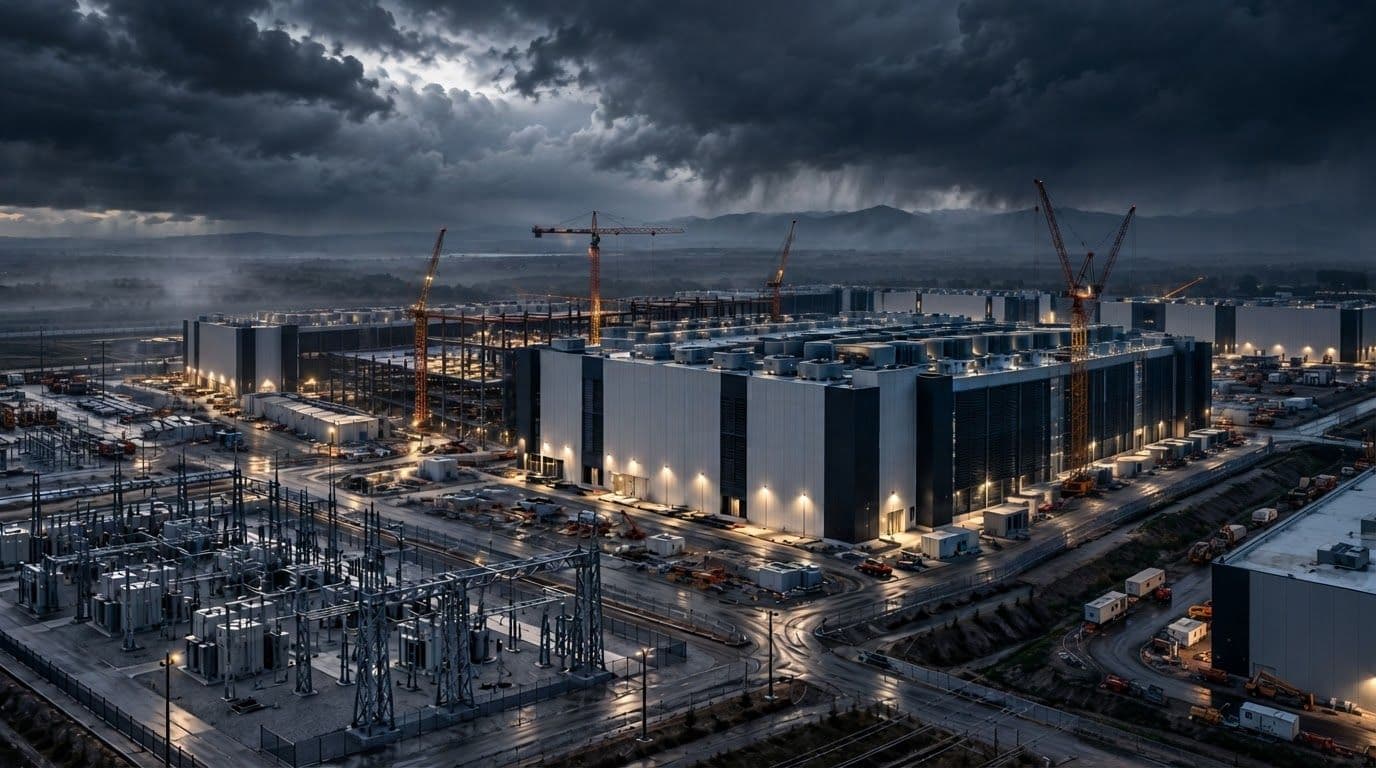
The AI industry just closed a month that makes no coherent sense unless you accept a single premise: this sector is simultaneously the most funded and most fragile in modern technological history. Over the course of the past 30 days, we witnessed some of the biggest AI advancements and milestones while simultaneously facing up to the financial realities that come with them.
Let’s start with the positives.
Despite concerns that it may be slowly losing ground to Anthropic, OpenAI had a record month. It recently closed a $122 billion funding round at an $852 billion post-money valuation. Notably, this makes it the largest private capital raise in history. The funding round saw participation from the likes of Amazon, Nvidia, Microsoft and SoftBank, among others.
The funding comes on the heels of improving financials and a product vision that is starting to look like it means business. The company now reports $2 billion in monthly revenue, 900 million weekly active ChatGPT users, and over 50 million subscribers. Though it remains deeply unprofitable, the latest figures put the company at a much better position than it was 12 months ago.
For context, OpenAI reported a mere ~$1 billion in revenue per quarter at the end of 2024 and around $13–20 billion annualised through 2025. At the current $24 billion in annualised revenue, the revenue growth is supposedly 4x faster than what the biggest internet/mobile companies (Google, Meta, etc.) did at a similar stage.
Not to mention, its recently-launched ads pilot is also helping subsidise some of the compute and inference costs it racks up servicing free-tier users. In just six weeks, the ads pilot had already pulled in more than $100 million in ARR.
On that note, OpenAI CFO Sarah Friar was blunt about the company’s ambition: OpenAI wants to be an "AI superapp." It plans to roll ChatGPT, Codex, browsing, and agentic capabilities into a single interface. As part of this vision, OpenAI also recently acquired Astral - the startup behind the popular Python tools uv, Ruff, and ty. The acquisition sees the Astral team being folded into Codex. The strategic logic here involves moving Codex from a code generator into a full-lifecycle development partner that manages dependencies, linting, and type-checking natively.
There’s no doubt that this is a measure to increase competitiveness against Claude Code - the competitor product from rival AI startup Anthropic around which discussions have dominated many a Twitter timeline.
Speaking of which, Anthropic has had a crazy month in its own right. The company has been pushing product updates at a crazy pace, releasing over 14 major updates and numerous smaller improvements centered on Claude, Claude Code, and agentic AI capabilities. The most notable include an Auto Mode for autonomous multi-step task execution, expanded computer-use capabilities, and mobile work tools - all reinforcing its position as the coding-first AI lab that OpenAI is now scrambling to match.
Meanwhile, Google quietly launched two impactful products of its own last month. The first is TurboQuant - a training-free compression algorithm that quantises the largest memory bottleneck in LLM inference down to 3 bits with essentially zero accuracy loss. To put it simply, it’s revolutionary tech that will supposedly make AI much cheaper, faster, and more practical to use, without making the AI any dumber. Some have jokingly compared it to the "Pied Piper" algorithm – a fictional compression breakthrough from the HBO TV show ‘Silicon Valley.’
The second is Google Stitch - an AI-native design platform that turns natural language descriptions into high-fidelity UI designs. Stitch essentially allows users to "vibe design." Just like “vibe coding,” the platform lets users create beautiful, professional-looking screens for mobile apps or websites just by describing what they want in plain English.
In even more bullish news, Elon Musk’s SpaceX (which recently merged with xAI) confidentially filed for an IPO, targeting a valuation exceeding $1.75 trillion. If the listing proceeds, possibly as early as June, it would be the largest IPO in history by a wide margin, dwarfing Saudi Aramco's $29.4 billion offering.
Now, the flip side.
Despite the many positives, there are just as many negatives and hidden costs that underpin the industry. For instance, alongside its mammoth fundraise, we also saw OpenAI shut down Sora (its popular AI video generation tool) last month.
This came just six months after its public release. According to a WSJ report, Sora peaked at around one million users before collapsing to under 500,000, all while burning roughly $1 million per day in compute. On a podcast addressing the decision, OpenAI CEO Sam Altman stated that he felt "terrible”, but that OpenAI needed to redirect its compute toward automated researchers and coding tools. Clearly, there isn’t enough compute to feed all mouths. It also reveals that the AI video generation market is yet to find product market fit. It remains a solution looking for a paying audience at scale. In other words, not every capability advance automatically translates into a business.
On that note, this is nothing compared to the fumbles made last month by Anthropic. Notably, the company saw two major internal leaks that had people questioning its security capabilities. First, a Fortune investigation revealed that a configuration error in Anthropic's content management system had left nearly 3,000 internal documents publicly accessible. These included a draft blog post about "Claude Mythos," which it described internally as the most powerful model Anthropic has ever built. Second, just days later, the entire Claude Code source code was accidentally published to npm via an unstripped source map file. The leaked files revealed a significant chunk of Anthropic’s roadmap, with security researchers finding references to an "Undercover" mode designed to mask Claude's identity in public code contributions, and a "Kairos" always-on agent feature with push notification capabilities. While the leaks generated massive publicity for Anthropic, they also arguably blunt its competitive edge.
As for Google’s TurboQuant, it forces us to confront a core assumption of the AI investment thesis – that AI infrastructure needs will scale linearly with demand. After all, if inference memory can be compressed 6x without accuracy loss, then the hardware demand curve flattens out. This concern was reflected in the sharp sell-off in memory-related stocks after the TurboQuant announcement.
In the case of the SpaceX IPO, it’s clear that the xAI merger in the months prior was an attempt to bolster its IPO success rather than any fundamental alignment as otherwise stated. Notably, one of the key reasons Musk cited for the merger was his goal of launching "orbital data centres." For context, these space-based AI compute centers will supposedly circumvent the energy and land-use constraints plaguing terrestrial AI firms.
However, orbital data centres are very much a theoretical concept rather than a practical one. They face fundamental physics problems that no amount of venture capital solves: the cost of launching mass into orbit, the thermal management challenges of running GPUs in vacuum, the latency constraints of satellite links, and the impossibility of physically servicing failed hardware. It is a concept that is economically impractical at any foreseeable timescale.
It does however efficiently serve a different purpose – inflating SpaceX's valuation from a $1 trillion aerospace company into a $1.75 trillion "space-AI infrastructure" platform. Not to mention, both xAI and X (formerly Twitter) are notorious money sinkholes – we doubt a standalone IPO debut of either will go so well. The unfortunate part is that many retail investors will buy into the story rather than question it.
It’s good until it isn’t. We’re also beginning to realise that the AI industry is no longer in its "figure out the technology" phase. It’s now in the "figure out the business" phase. The companies that survive the next two years will not be the ones with the best benchmarks. They will be the ones that solve the gap between what AI can do and what someone will reliably pay for it.
🔥 Hot Deal Of The Week 🔥
If you’re actively trading or planning to scale your crypto exposure this cycle, execution costs matter more than most people realize. Even a small fee difference compounds aggressively over time, especially if you’re trading perps or rotating capital frequently. That’s why we’ve secured an exclusive Binance deal for our readers: 20% trading fee discount for life, plus a $600 bonus when you sign up through our link. This isn’t a temporary promo, it’s a permanent edge that improves your net performance on every single trade.
Binance remains the most liquid exchange globally, which means tighter spreads, better fills, and less slippage, critical if you’re operating with size or precision. Combined with this fee reduction and bonus, you’re effectively upgrading your entire trading stack overnight. If you’re serious about optimizing your execution and keeping more of your profits, this is one of the highest ROI upgrades you can make right now.
👉 Sign up using our link and lock in the deal while it’s still available!
🔮 Video Pipeline 🔮
Coin Bureau Main
* IMF Masterplan: The terrifying rise of highly controlled digital currencies!
* Crypto Decentralisation Is Dead: Have we strayed from Satoshi’s vision?
Coin Bureau Finance
* US Energy Independence: Why the US exports the oil it has whilst importing crude?
* Food Cost Vs Price: Why food prices go up in spite of falling production cost?
* Net Worth By Age: How much money should you have?
🏆 What's New at CoinBureau.com This Week? 🏆
* Bitget Exchange Uncovered In 2026: Pros, Cons, and Key Features Reviewed
* How To Invest In Crypto In 2026: A Step-By-Step Guide For Beginners
* Discover the Top Altcoin Exchanges for Seamless Trading In 2026
* In-Depth Nexo Review: Is This the Right Crypto Lending Platform for You in 2026?
* Inside Midnight Network: Cardano's Privacy-Focused Partner Chain
* Understanding Circle’s Arc Blockchain And Its Role In Stablecoin Finance
📖 Quote of the Week 📖
“Don't judge each day by the harvest you reap but by the seeds that you plant.” - Robert Louis Stevenson
Team Coin Bureau
Disclosure: Authors may own cryptoassets named in this newsletter. These are unqualified opinions, and a Coin Bureau newsletter, is meant for informational purposes only. It is not meant to serve as investment advice. Please consult with your investment, tax, or legal advisor.

Editorial Team
The Coin Bureau Editorial Team are your dedicated guides through the dynamic world of cryptocurrency. With a passion for educating the masses on blockchain technology and a commitment to unbiased, shill-free content, we unravel the complexities of the industry through in-depth research. We aim to empower the crypto community with the knowledge needed to navigate the crypto landscape successfully and safely, equipping our community with the knowledge and understanding they need to navigate this new digital frontier.
Join the Coin Bureau Club
Get exclusive access to premium content, member-only tools, and the inside track on everything crypto.
Related Newsletters


Join the Coin Bureau Club
Get exclusive access to premium content, member-only tools, and the inside track on everything crypto.